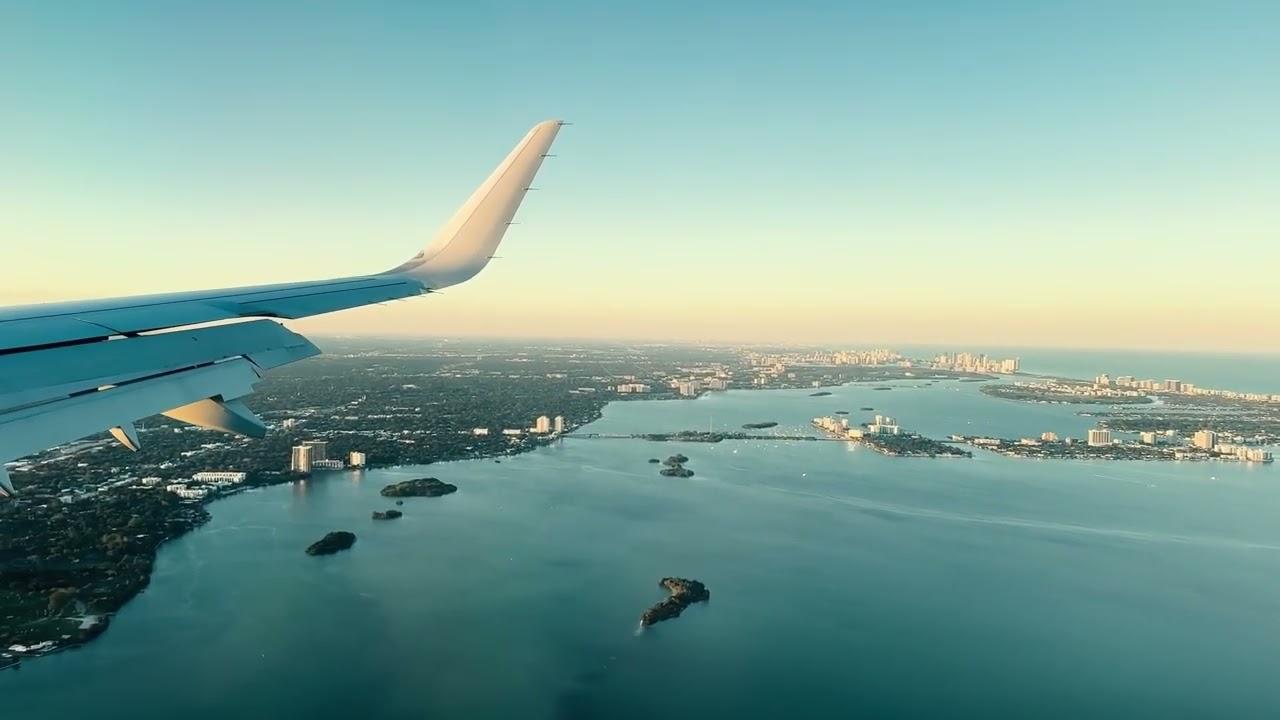
On October 20, 2026, NASA's Neil Gehrels Swift Observatory sank to about 275 kilometres (171 miles) above Earth, and its operators at Penn State switched it off for good. That ended nearly 22 years of fast-reacting gamma-ray burst science. It also closed the story of a 30 million dollar robotic rescue that never got close enough to touch it. This article explains why Swift fell so quickly, what went wrong with Katalyst Space's LINK spacecraft, where debris can and cannot land, what science we lose, and why all of it matters for the Hubble Space Telescope.
Quick Answer
Swift had no thrusters, and an active Sun thickened the upper atmosphere, so drag pulled it down fast. A commercial boost attempt failed, so Swift makes an uncontrolled descent inside a tropical latitude band that is mostly ocean.
Key Takeaways
- NASA says recent solar activity increased atmospheric drag on Swift, and the team ended operations after it reached 275 kilometres on October 20, 2026.
- Katalyst Space's LINK spacecraft lost two of its three reaction wheels after launch, and NASA called off the capture and boost on August 19, 2026.
- Swift's orbit is tilted about 20.6 degrees to the equator, so its debris can only fall between roughly 20.6 degrees north and south.
- Swift built its reputation by pointing X-ray and ultraviolet telescopes at gamma-ray bursts within minutes, and no dedicated replacement does exactly that.
- Hubble also lacks its own propulsion, but it carries a docking ring installed by astronauts in 2009 for a future boost or safe disposal.
The Sun Set the Clock on Swift'S Orbit
Swift launched on November 20, 2004, into an orbit about 600 kilometres (roughly 370 miles) up. It was designed for a two year mission and flew for nearly 22. The catch? It had no propulsion system, so it could never climb back up once it started to sink.
THE EVIDENCEFact: NOAA's Space Weather Prediction Center says satellites in low Earth orbit need to boost about four times a year when the Sun is quiet, but may need manoeuvres every two to three weeks near solar maximum. Swift had no way to make even one.
Low Earth orbit is not empty. A thin trace of upper atmosphere reaches that high, and every lap through it steals a little speed. Losing speed drops a satellite into denser air, which steals speed faster, and that loop only runs one way unless something pushes back.
Why the Sun Sped Things Up
NASA's Swift mission blog says recent solar activity increased the drag on Swift, and it began to sink rapidly. An active Sun heats the upper atmosphere and makes it swell outward, so a satellite at the same height suddenly meets thicker air. KeepTrack, an independent tracker working from US Space Force data published on Space-Track, shows Swift dropping about 114 kilometres (around 71 miles) in just 69 days near the end.
Swift's team also made a deliberate trade. They paused science observations to reduce drag while a rescue was prepared, then switched science back on once the rescue was cancelled, knowing that pointing the telescope around would shorten its remaining life.
Why the LINK Rescue Never Reached Swift
In September 2025, NASA picked Katalyst Space, a startup based in Flagstaff, Arizona, for a 30 million dollar mission to catch Swift and push it higher, according to SpacePolicyOnline. Scientific American reported the team had about nine months to design, build and launch it. For a spacecraft meant to chase, grab and push another spacecraft, that schedule was extremely tight.
Here is the distinction many headlines blurred. The rescue did not cause the Swift reentry; it failed to stop a fall that solar-driven drag had already started. Judging the mission fairly means asking whether the attempt was reasonable, not blaming it for the physics.
What Broke on LINK
LINK launched on July 3, 2026. By late July, NASA's Swift blog reported that two of LINK's three reaction wheels were not working, its cold gas thrusters had lost some function, and the spacecraft was spinning with only sporadic communication. Reaction wheels are spinning flywheels that turn a spacecraft without burning propellant, so losing two of three makes precise pointing very hard.
There was a second problem built into the target. Swift was never designed to be serviced, with no grapple fixture or docking port, as Katalyst's own mission page acknowledges. On August 19, NASA and Katalyst agreed there would be no capture and no boost. The Associated Press reported that LINK never got closer than about 12 to 15 kilometres (7 to 9 miles) from Swift, a huge gap when the plan was to grab hardware with a robotic arm. AP later reported that LINK itself fell back into the atmosphere.
Where Swift'S Debris Can and Cannot Fall
Swift's debris cannot land just anywhere. Its orbit is tilted about 20.6 degrees to the equator, so the spacecraft never passes north or south of that latitude. That limits any surviving pieces to a band running from roughly the latitude of Hawaii down to northern Australia, and most of that band is open ocean.
THE EVIDENCEImportant: NASA's mission blog confirms that on October 20, 2026, at 275 kilometres, Swift could no longer compensate for the extra drag and entered safe mode. Penn State's team then sent a command ending operations, leaving a passive spacecraft whose path is set only by its orbit and drag.
What Survives and What the Risk Looks Like
NASA expects most of the roughly 1.5 tonne spacecraft to burn up, though NASA spokesperson Alise Fisher told Space.com that some components are expected to survive. The Associated Press reports that dense tungsten parts and fragments of Swift's mirrors could reach the surface. Tungsten has the highest melting point of any metal, which is why it may outlast the rest of the structure.
The risk to any one person is very small, but it is not zero. Nature World News noted that NASA had not published a casualty estimate for Swift. A real precedent shows why officials take falling hardware seriously: in March 2024, a piece of a battery pallet discarded from the International Space Station crashed through a roof in Naples, Florida, and NASA later confirmed its origin.
Timing is the hardest part. A Space-Track prediction issued on November 1, 2026, gave a nominal reentry time of about 00:30 UTC on November 4, and KeepTrack noted the uncertainty window was still very wide. As Newsweek pointed out, these forecasts usually narrow only in the final hours, so anyone naming a city or exact time days ahead is guessing.
Twenty-Two Years of Catching Gamma-Ray Bursts
Swift carried three instruments: the Burst Alert Telescope, the X-ray Telescope, and the Ultraviolet/Optical Telescope. Its trick was speed. When the Burst Alert Telescope spotted a gamma-ray burst, the spacecraft swung around on its own and pointed the other two telescopes at it within minutes, while the fading afterglow was still bright enough to study.
THE EVIDENCEDo You Know: Penn State, whose Mission Operations Center controlled Swift's science and flight operations, reported years ago that the observatory had already detected its 1,000th gamma-ray burst. Each of those detections fed rapid alerts to telescopes around the world.
That speed changed what astronomers knew about the early universe. In 2009, Swift caught GRB 090423, a burst from when the universe was only about 630 million years old. In 2017, it helped follow up GW170817, the first neutron star merger ever detected in gravitational waves. A YourNews report summing up the mission credits Swift with contributing to nearly 7,000 scientific studies.
Named for the Person Who Led It
In 2018, NASA renamed the observatory after Neil Gehrels, the mission's principal investigator, who died in 2017. The operations team at Penn State in University Park flew the spacecraft from launch to the final command, which is a long run for hardware built for two years.
The loss is real, and Nature World News pointed out that NASA has no dedicated replacement for catching bursts within minutes. NASA's Fermi still watches the gamma-ray sky, and newer missions such as the Chinese-French SVOM and the Einstein Probe cover part of the job. The exact Swift combination of detection plus rapid multi-wavelength follow-up is what goes missing. The archive, however, stays open, so papers built on Swift's final observations may keep appearing for years.
What Swift'S Fall Means for Hubble
Hubble launched in 1990, weighs about 11 tonnes, and is slowly sinking too. Like Swift, it has no thrusters of its own. Unlike Swift, Space Shuttle astronauts visited it five times, and those servicing missions could raise its orbit. With the shuttle retired, that option is gone.
THE EVIDENCEStat: ESA notes that for large uncontrolled reentries such as Skylab and Salyut-7, 20 to 40 percent of the spacecraft's mass may survive to reach the ground. That is why a controlled plan matters far more for an 11 tonne telescope than for Swift.
Reporting on NASA's latest request for information, including from Tech Insider, says the agency wants industry ideas to raise Hubble to about 600 kilometres by 2032, or to retire it safely. Left alone, projections reported there point to a reentry around 2033. Something that heavy cannot simply be left to fall, because much larger pieces would likely survive than in Swift's case.
Why Hubble Starts From a Better Position
On the final servicing mission in 2009, astronauts attached a soft capture mechanism to Hubble's base. It is essentially a docking ring, added for exactly this kind of future visit. Swift had nothing designed to be grabbed. Hubble does, which can turn an improvised grapple into a planned docking.
Swift's rescue suggests three lessons for Hubble. Start early, because decay speeds up near the end. Plan for hardware failures, because LINK lost attitude control within weeks of launch. And prove approach and capture on cheaper targets before touching an irreplaceable observatory. Seen that way, the 30 million dollars bought hard engineering lessons, even though it did not save Swift.
Want to watch Swift's three clocks run out, with real mission imagery and every claim labelled? The full story is on Escape Velocity, where we follow launches, reentries and the data releases that come after.
Watch the embedded video above for the complete breakdown, then tell us whether NASA should pay to boost Hubble. If you want the real engineering behind every launch and every reentry, subscribe to Escape Velocity.
Further Reading
- We Hit an Asteroid in 2022. Now Hera Is Checking the Damage
- NASA'S $20 Billion Moon Base: What Has to Fly First
- Flight 15 Double Catch: Why Starship's Heat Shield Matters More
Explore Escape Velocity.
Frequently asked questions
Will I be able to see Swift come down?
Possibly, but only with luck. A reentry fireball is visible only to people under the right part of the track, usually near dawn, dusk or night, and the exact path is not known until the final hours. Most of Swift's possible track crosses open ocean, so few people are likely to see it.
What should I do if I think I found a piece of it?
Leave it where it is and report it to local authorities. Fragments can have sharp edges or leftover materials, and officials need the object undisturbed to work out whether it really came from a spacecraft. In the Naples, Florida case, NASA analysed the recovered piece before confirming where it came from.
Is Swift's science lost when the spacecraft burns up?
No. The observations Swift sent down over nearly 22 years stay in public archives, including the hundreds of targets it observed after science resumed in August 2026. Researchers can keep analysing that data, so new results based on Swift may appear long after the hardware itself is gone.
Did the LINK spacecraft add to the debris problem?
Only briefly. The Associated Press reported that LINK reentered the atmosphere after the mission was called off, so it is no longer in orbit. A small spacecraft failing in low orbit tends to clear out within months or years because drag pulls it down, unlike debris left much higher up.
Will the Sun keep pulling satellites down faster?
Drag rises and falls with the roughly 11 year solar cycle, so it should ease as solar activity declines. Satellites with thrusters can boost themselves to compensate, while those without, like Swift and Hubble, simply lose altitude faster during active years. Operators plan around that cycle, but strong storms can still surprise them.